


In this study, we compared the launch of projects on drop domains and new domains. Main conclusion: a domain with history can speed up indexing and first search transitions, but only if the domain history is clean, the topic is relevant, and the new site does not look like a random collection of AI pages.
5 084
two drop projects received search visits
417
applications came from organics on two drop domains
331
two projects on new domains received a search visit
≈20×
difference in applications in favor of domains with history
A drop domain does not replace an SEO strategy. It gives initial credibility, but the search engine still evaluates the intent, structure, commercial factors, text quality and user behavior.
If you want to buy a domain with history, first check not only DR and donors, but also old topics, anchors, archive, index, spam redirects and traces of sanctions.
What exactly was checked
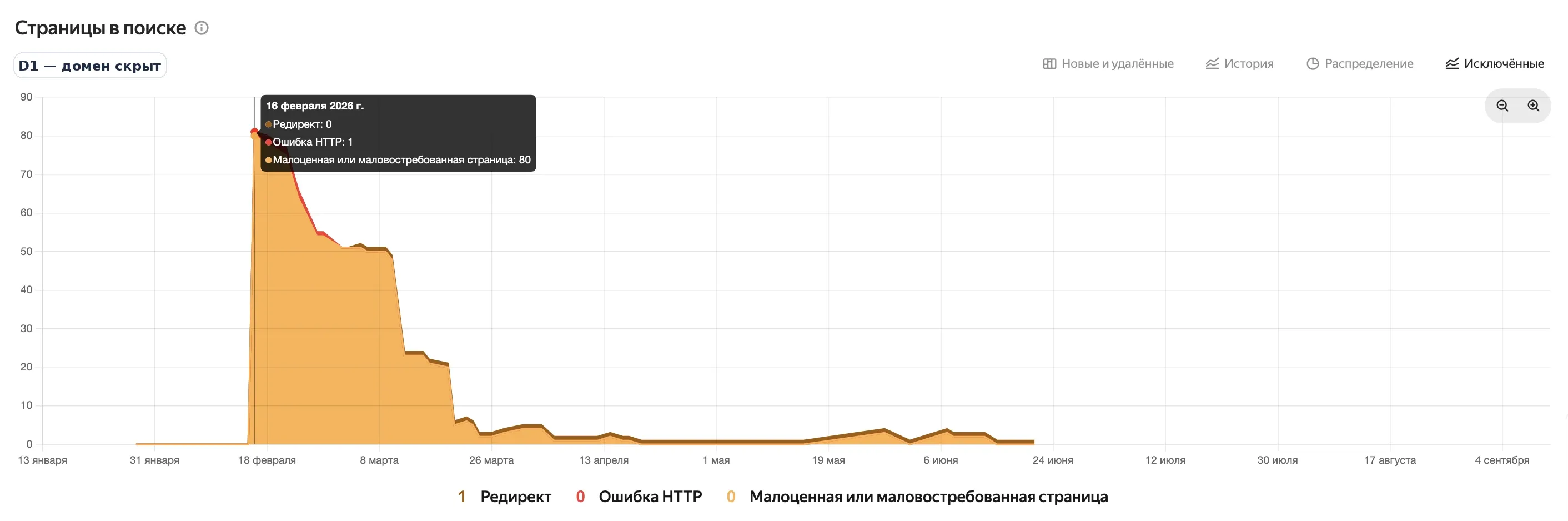
We compared four launches: two sites on drop domains and two sites on new domains. We looked not at the abstract “SEO growth”, but at the practical chain: pages getting into the index, first search visits, organic dynamics and applications.
| Project | Domain type | Site type | Observation period | Role in the study |
|---|---|---|---|---|
| D1 | Drop | Services website | 11.01-22.06.2026 | Checking the drop for traffic and applications |
| D2 | Drop | Information site | 05.05-22.06.2026 | Checking the start speed of an info project |
| N1 | New domain | Services website | 01.02-22.06.2026 | Test run on a clean domain |
| N2 | New domain | Services website | 01.03-22.06.2026 | Second control run |
The data is anonymized: what is important to us is not the niche of a particular project, but the difference between a domain with history and a new domain.
Summary results
In this sample, drop domains did not give a “slightly faster start”, but a multiple gap. Two projects received on drops 5,084 search visits, and two projects on new domains - 331 visits. According to applications, the difference is similar: 417 vs 21.
15.4× more search visits
5,084 visits to drops versus 331 visits to new domains.
≈19× more per week
About 170 search visits to the site per week for drops versus 9 for new domains.
≈20× more applications
417 applications for two drops versus 21 applications for two new domains.
1,149 visits per week
The last week of two drops turned out to be stronger than the entire period of observation of two new domains.
| Metrica | D1, drop | D2, drop | N1, new domain | N2, new domain |
|---|---|---|---|---|
| Observation period | 161 days | ≈48 days | ≈142 days | ≈114 days |
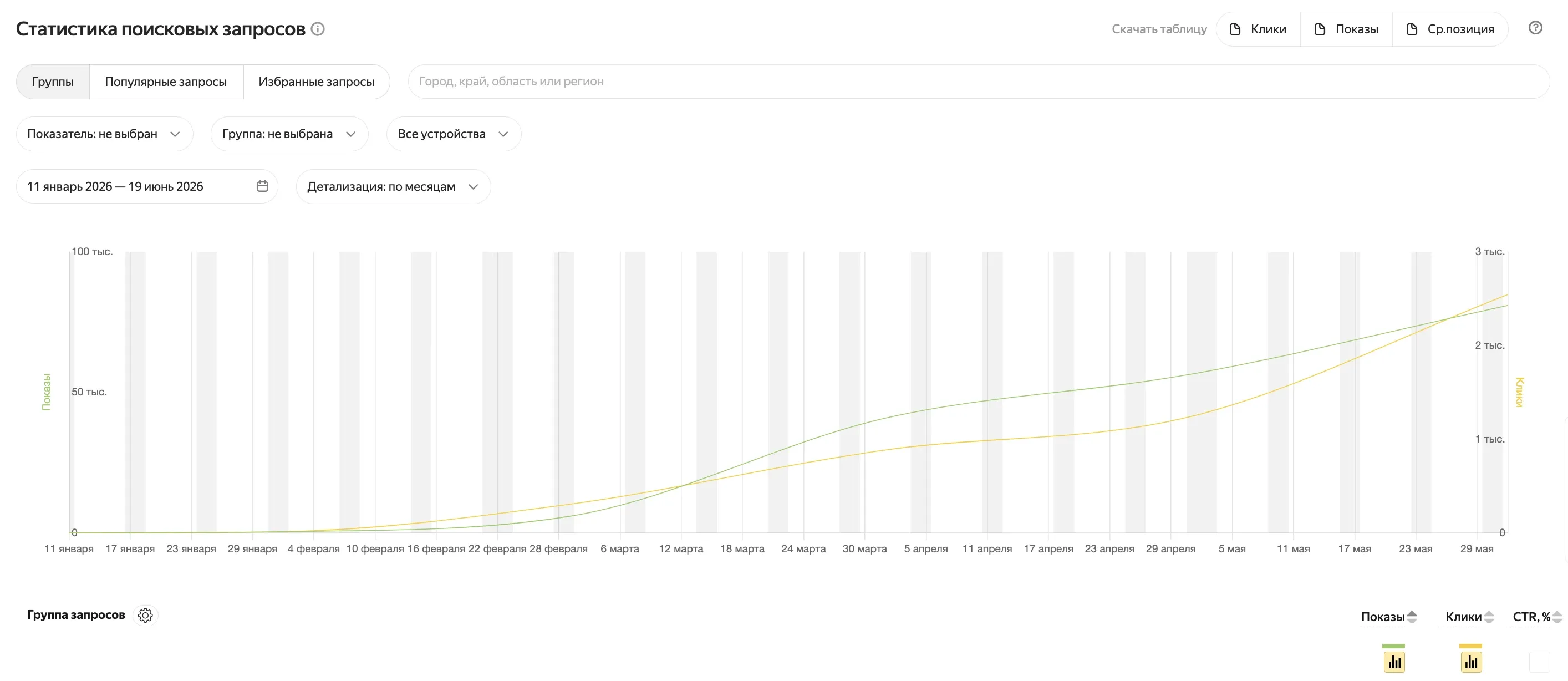
| Search visits | 4 177 | 907 | 263 | 68 |
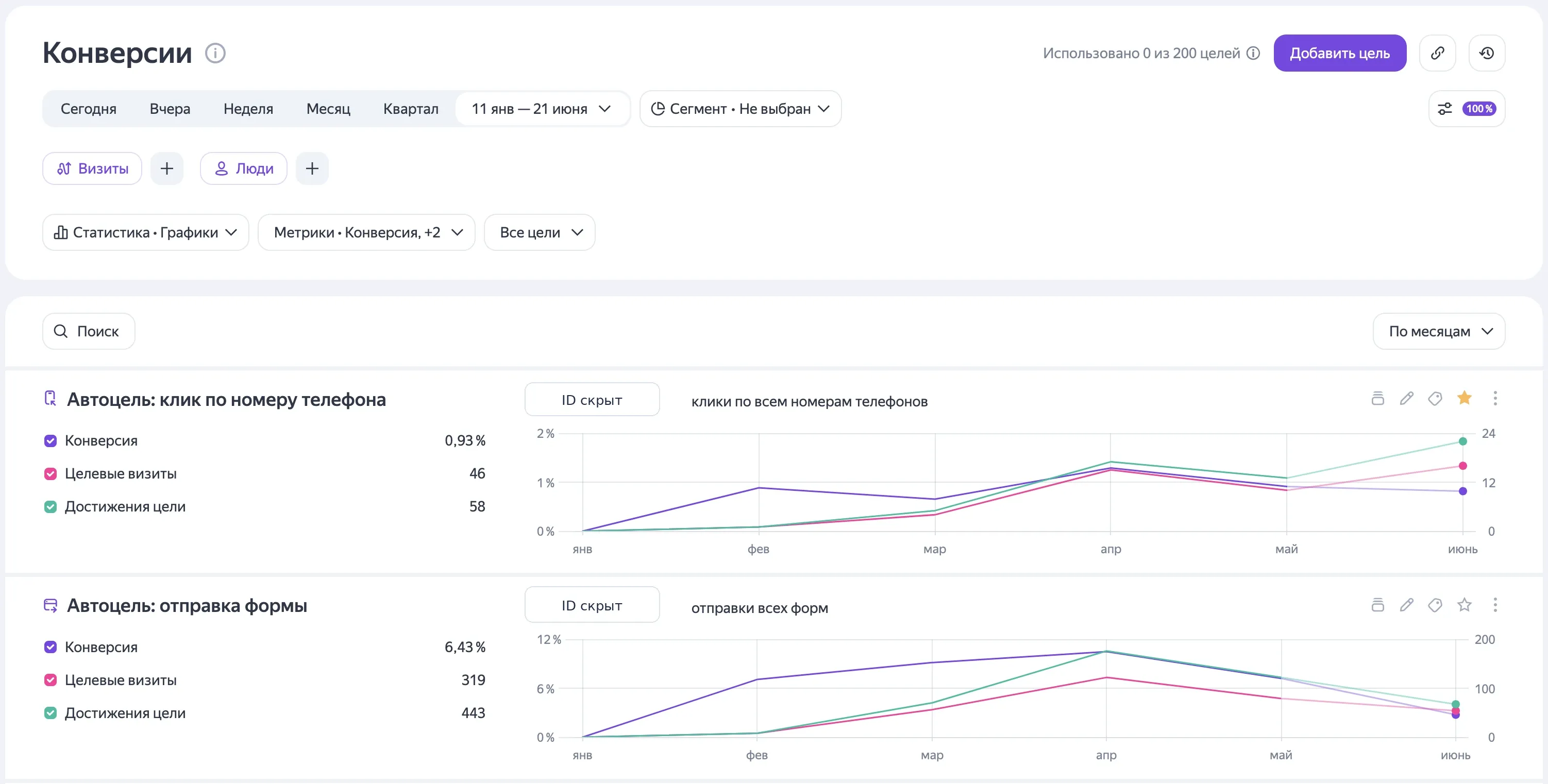
| Applications | 319 | 98 | 21 | 0 |
| Average search visits per week | ≈182 | ≈132 | ≈13 | ≈4 |
| Additional on D1 | 184,729 views | n/a | n/a | n/a |
Different periods and niches do not allow us to call this a strict laboratory experiment, but the gap is large enough to use drops as a separate hypothesis for SEO start.
Screenshots from the study
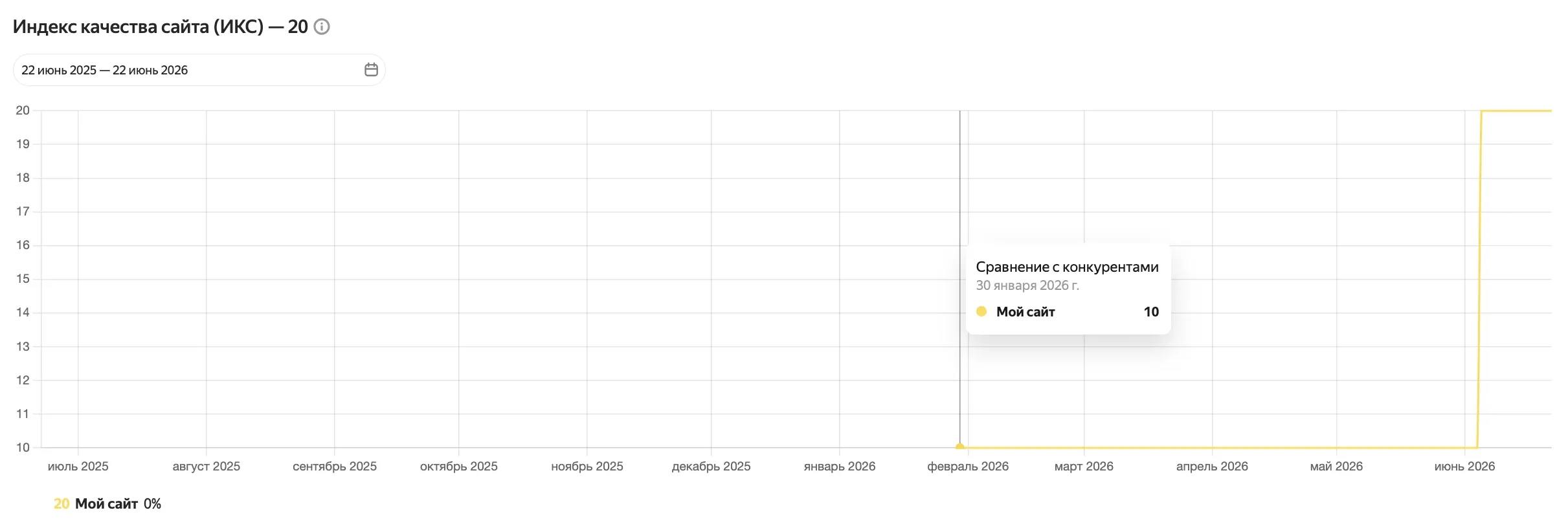
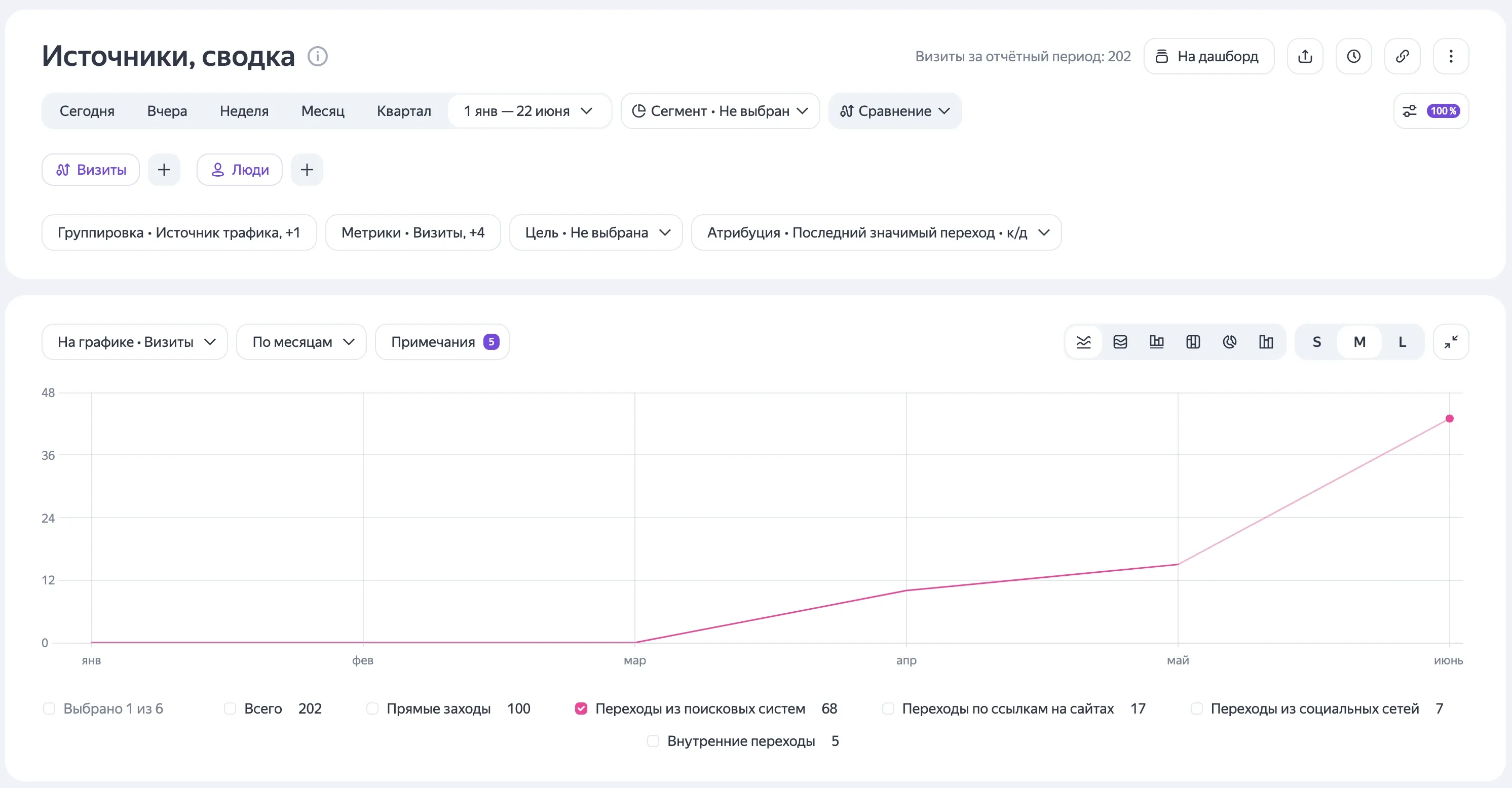
Below are visual confirmations for each site from the sample: indexing, ICS, search visits, clicks and applications. The screenshots are placed in the media library, so the article does not store heavy inline images.
D1 - drop, service site
D2 - drop, information site
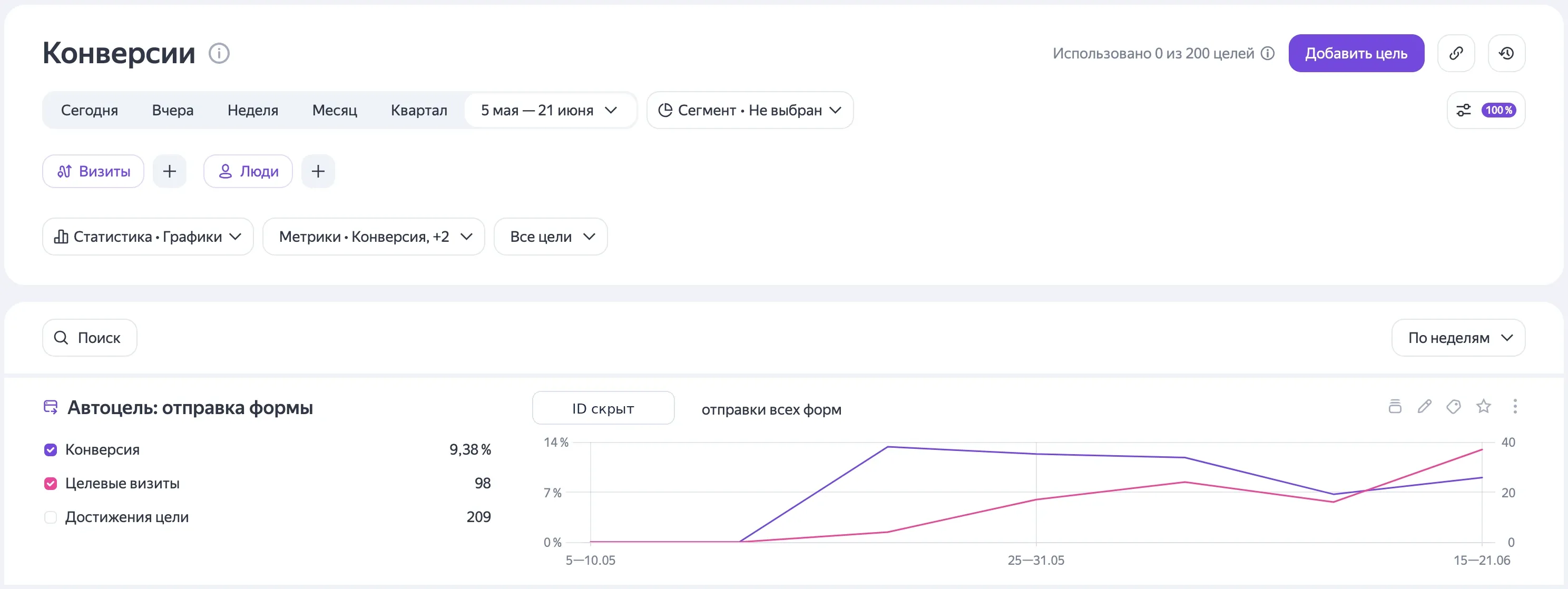
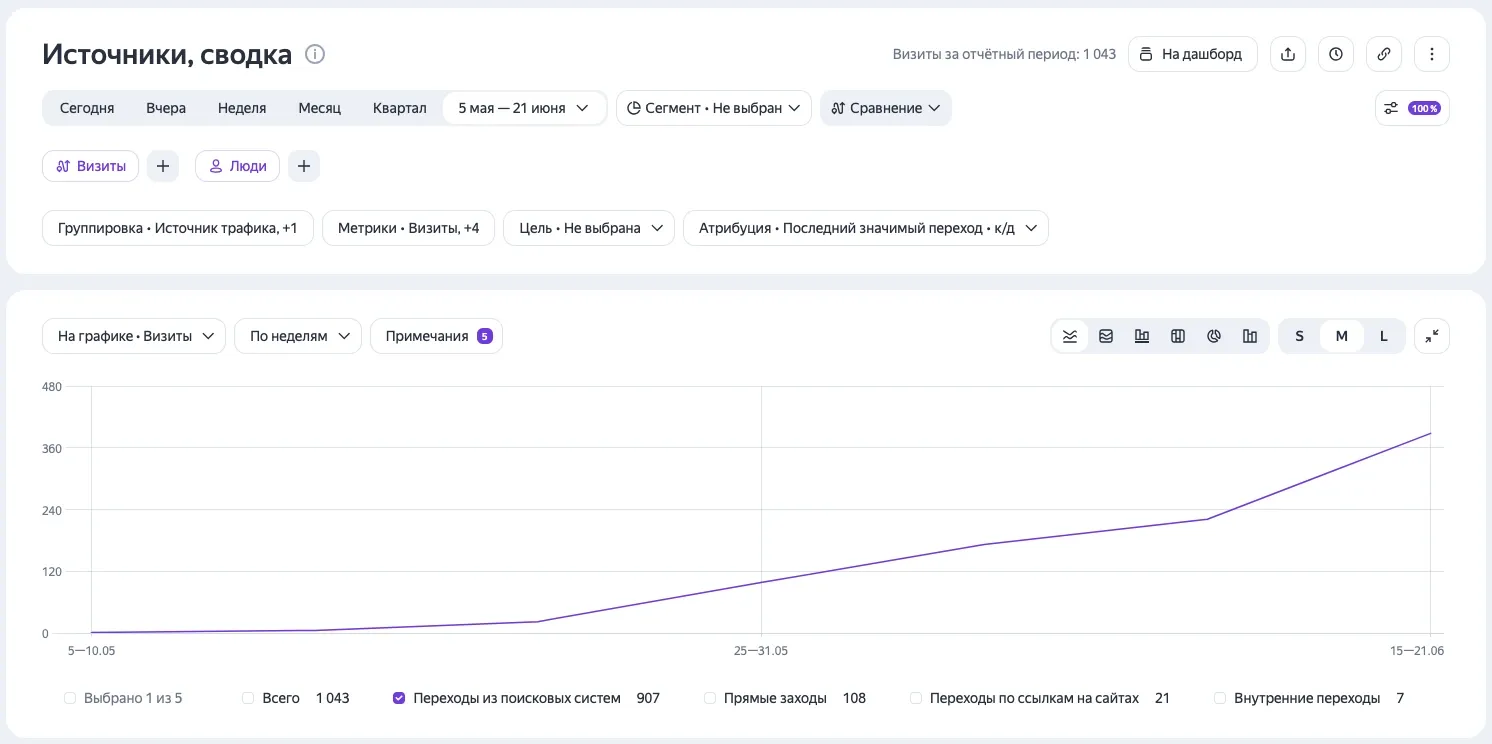
N1 - new domain, service site
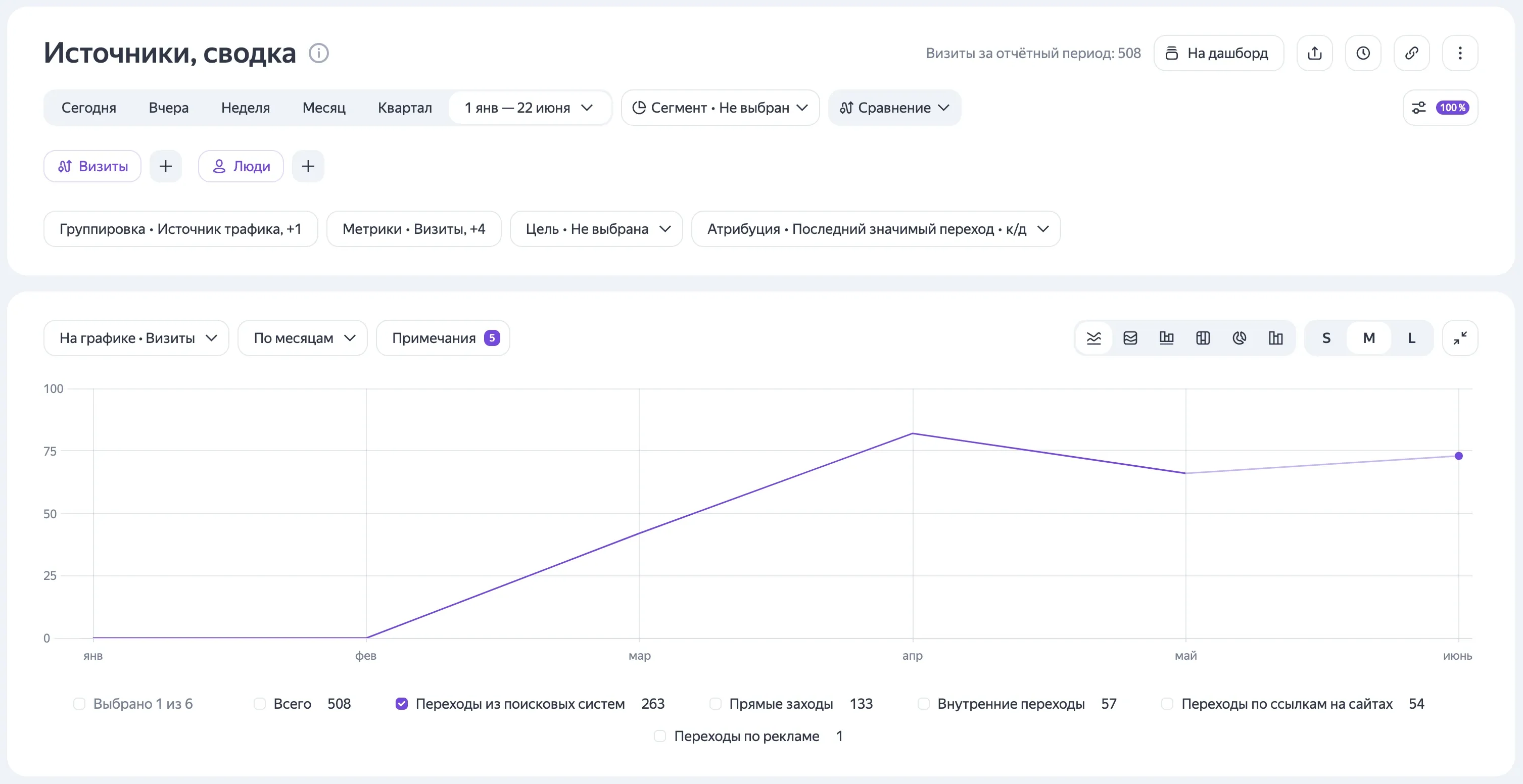
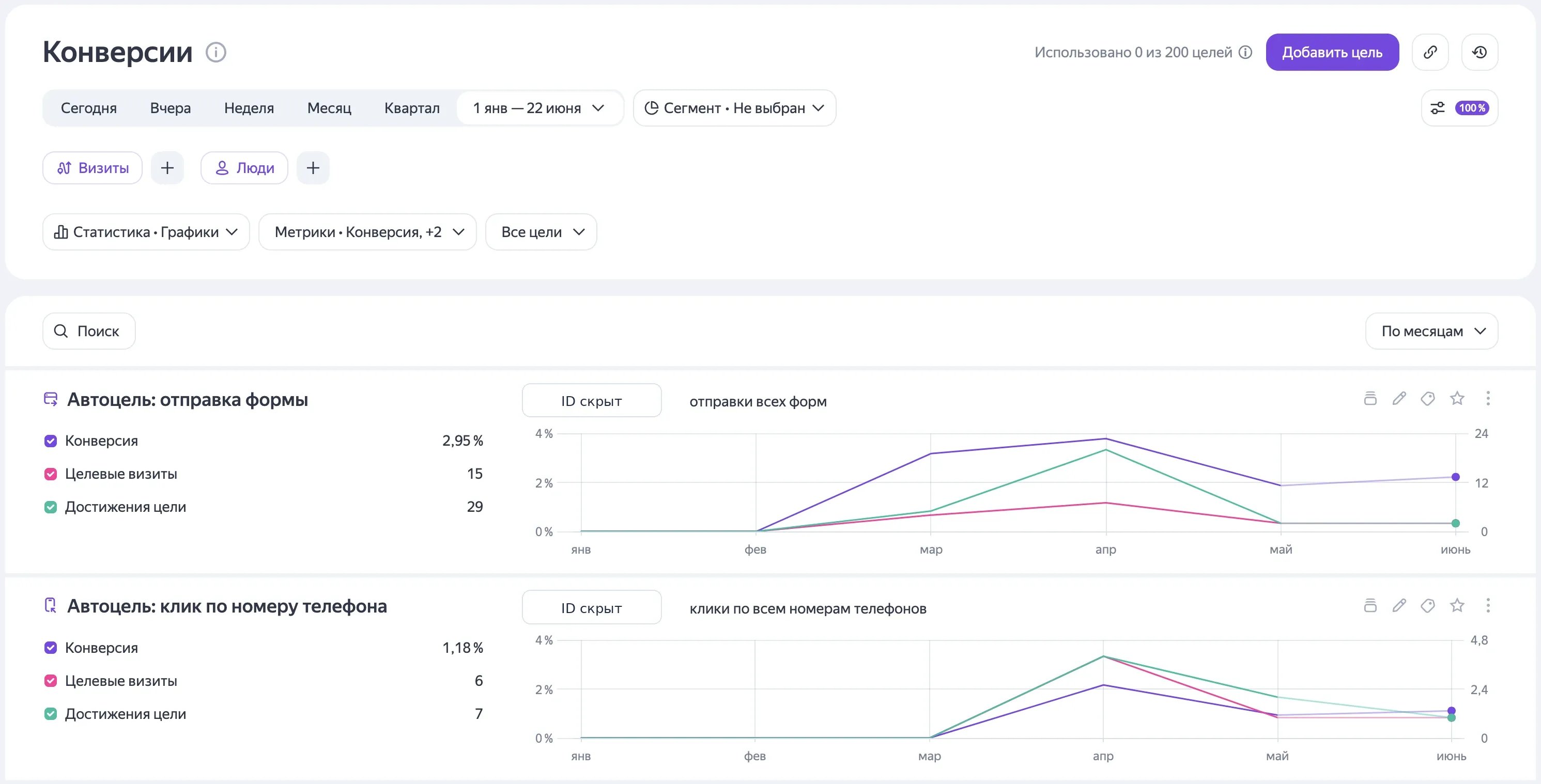
N2 - new domain, service site
Why a domain with history can work
The search engine does not see “drop” as a magic button. She sees a set of signals: old mentions, links, crawl history, thematic anchors, saved pages in the web archive, user behavior and the speed at which new documents appear in the index.
Crawl history and domain trust
Relevant donors and anchors
Clean history in Web Archive
Quality of the new site and intent
If the domain previously lived in a related topic, had natural links and was not used for doorways, casinos, pharma or redirect schemes, it can give the project a head start. But if you put a weak website on it, uploading AI texts without structure and commercial factors, the story will quickly stop helping.
Risks: when a drop domain is dangerous
The main risk: buying a domain with a history that actually has a toxic history. A beautiful DR does not help if the archives contain spam topics and the anchors consist of garbage.
- Change of subject. A medical domain for construction or gambling for B2B almost always requires additional checks.
- Spam donors. A large number of links does not equal the quality of the link profile.
- Bad old pages. There could be tails, redirects, and junk URLs left in the index.
- Sanctions and manual filters. They are difficult to see by a single metric, so a comprehensive review is needed.
- Incorrect launch. The drop should not open as an empty template or a site with technical duplicates.
Checklist before buying a drop
Before we buy a domain with history, we check it as an asset, not as a fancy name. The minimum order is:
- Check the history in the Web Archive: subject, language, type of site, sudden changes in ownership.
- Evaluate the link profile: donors, anchors, nofollow/dofollow, end-to-end links, spam.
- Check indexing in Yandex and Google, old URLs and possible mirrors.
- View the domain in antispam databases and brand queries.
- Compare the old theme with the future planting structure.
- Plan the first pages so that they close the intent, and not just “revive” the domain.
- After launch, control crawl, sitemap, robots.txt, canonical and server responses.
| Check | What are we looking for? | Red flag |
|---|---|---|
| Web Archive | Thematic story and normal pages | Pharma, casinos, doorways, hacked pages |
| Anchors | Brand, URL, topic phrases | Hieroglyphs, adult, pills, casino, mass exact match |
| Donors | Relevant sites with live pages | Grids, directories, doorway subdomains |
| Index | Clear old URLs or a clean exit from the index | Thousands of junk pages and unknown mirrors |
Conclusions
A drop domain is not a way to fool the search engine, but a way to start with an already existing context: history, links, crawls and external mentions.
You should only buy a domain with history after checking it. The most dangerous mistakes are to look only at DR, ignore the Web Archive, and launch a new site without a clear structure.
Practical conclusion: a drop can be a strong accelerator if it is thematically close to the future project, has a clean history and is launched along with a normal SEO architecture. Otherwise, the old domain turns into a source of risk rather than an asset.
When is a drop better than a new domain?
When a quick start is important, it is possible to check the history of the domain, and the future site logically continues the old theme or at least does not conflict with it.
When is the best time to buy a new domain?
When a project is building a brand from scratch, the niche is sensitive to trust, and available drops have a dubious history or irrelevant links.




Comments
There are no comments yet. Be the first!